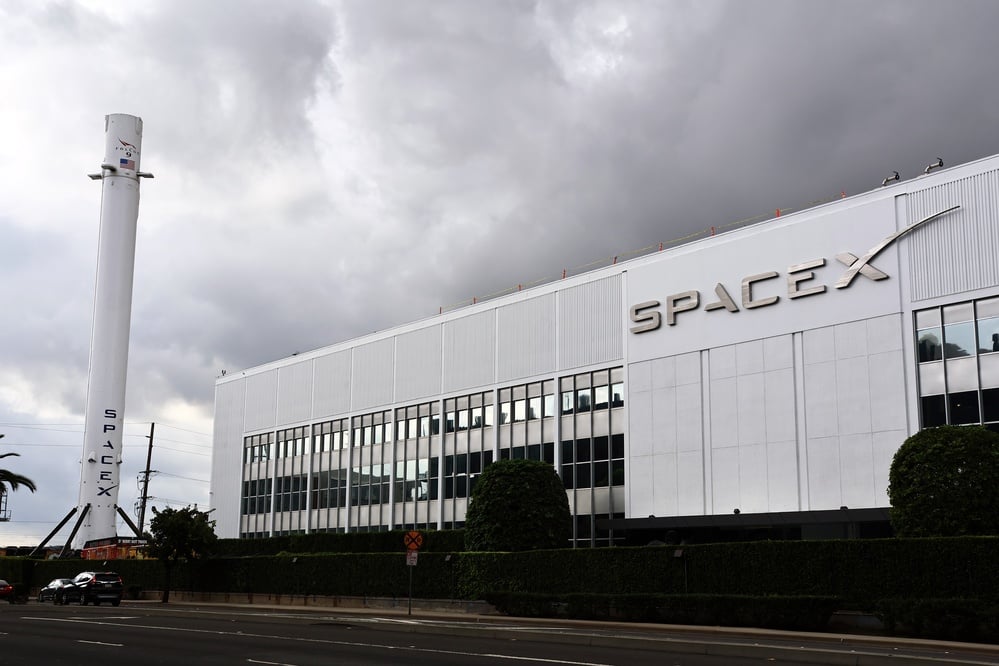


SpaceX shares dropped early Thursday, reversing some of the nearly 10% gain from the previous session. That earlier jump followed Elon Musk telling employees the company needs to focus on leading in AI, as he sees a future shaped by AI and robotics.
To support this goal, SpaceX launched Grok 4.6, its newest AI assistant meant to compete with OpenAI’s ChatGPT and Anthropic’s Claude. Musk called the new model smart, fast, and a good value on social media.
According to AI benchmarking firm Artificial Analysis, this release puts SpaceX’s AI back among the top performers with OpenAI, just behind Anthropic.
Shares dipped a bit on Thursday but stayed well above their mid-June opening price.
Grok seems to be catching up to its main competitors in performance, but SpaceX is also highlighting its lower price. The company says Grok costs about half as much as other top AI models. Artificial Analysis reports Grok 4.6 is priced at $2 per million input tokens and $6 per million output tokens. In comparison, Anthropic’s Claude Opus 5 costs $5 per million input tokens and $25 per million output tokens, while OpenAI’s GPT-5.6 Sol is $5 per million input tokens and $30 per million output tokens.
Earlier this year, SpaceX and Musk’s xAI officially merged. The company has kept bringing its AI projects together, including a $60 billion all-stock deal in June to buy Anysphere, the startup behind the Cursor AI coding tool. Cursor was key in developing and launching Grok 4.6.
Grok has historically lagged behind. In the past, Grok has fallen behind other AI models, with critics noting it made more factual mistakes and gave overconfident answers compared to Claude and ChatGPT. With this latest release, SpaceX seems to have improved on those issues. Musk projected that AI-driven internet traffic will eventually reach roughly 1,000 times the volume of human-generated traffic within five years, a vision the latest Grok release appears intended to help advance.