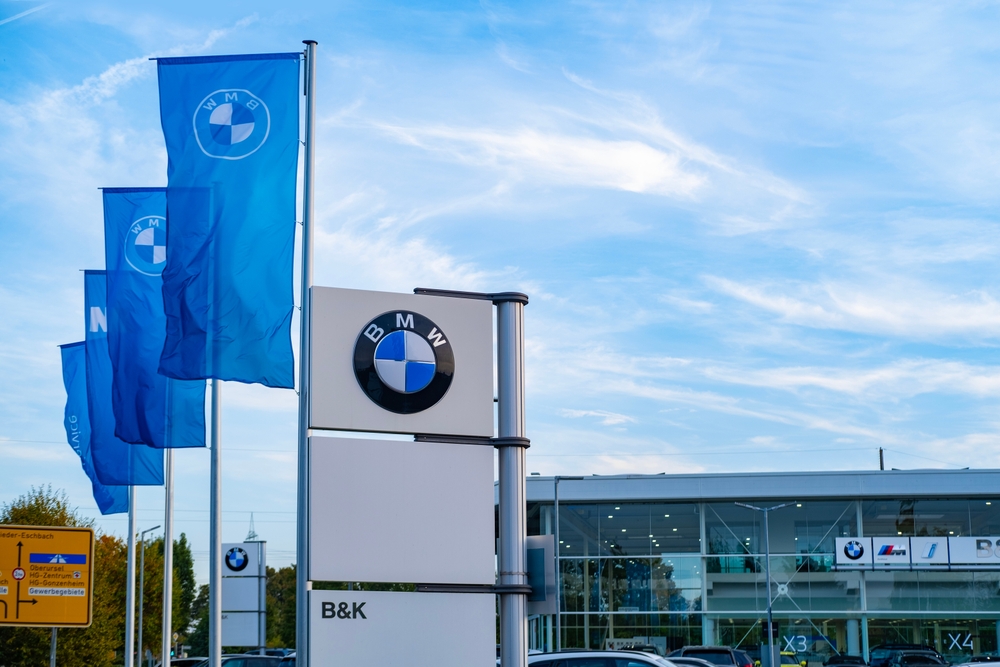


BMW has made one of its biggest profit margin guidance cuts in recent years, and the whole European auto sector is reacting. The company’s shares dropped 7.8% in overseas trading on Wednesday after it lowered its 2026 automotive profit margin forecast to 1%-3%, down from the 4%-6% range it had confirmed as recently as May. This change means BMW’s car division is now expected to earn about $3 billion in operating profit, instead of the $7 billion previously forecast. Shares of Mercedes-Benz fell 4.1%, while Volkswagen and Stellantis each lost nearly 3%. Here’s what caused the cut and why the issue may be long-term rather than just a short-term setback.
BMW said it cut its guidance because conditions in China’s passenger car market got worse faster than expected in the second quarter. This led to tougher competition not just in China, but throughout the Asia-Pacific region. Bernstein called this a rare mistake for BMW, pointing out that the company stuck to its earlier guidance until just recently. Growth in Europe and the United States was not enough to make up for the weakness in China.
The China problem is not a one-quarter issue. Brutal domestic price competition, led by local manufacturers including BYD, has been compressing margins for foreign automakers operating in the market for several consecutive quarters. Oxcap described the guidance cut as a shock and drew comparisons to 2008 and 2009, the last time BMW’s margins were this low. That period coincided with the global financial crisis, an acute shock that resolved relatively quickly. Analysts are increasingly treating China’s current dynamics as a chronic rather than cyclical challenge for foreign automakers.
Tesla is the U.S. company most affected by changes in China’s auto market. In 2025, Tesla made about $21 billion in sales in China, which was over 20% of its total revenue. Tesla’s shares dropped 0.7% in early trading on Wednesday. China is still the world’s biggest market for new cars and electric vehicles, so any lasting problems there are a major concern for the global auto industry.