

Palantir Technologies (PLTR) has sparked debate on Wall Street, but its inclusion in the S&P 500 has energized supporters.
After Friday’s market close, S&P Dow Jones Indices announced changes: Palantir will replace American Airlines; Dell Technologies will replace Etsy; and Erie Indemnity will take Bio-Rad Laboratories’ spot before trading begins on Sept. 23.
Joining the S&P 500 is more challenging than entering the Russell 1000 due to stricter profitability requirements over four quarters under GAAP standards.
Opinions differ sharply about this software and data-integration firm. Supporters highlight its AI platform’s potential for profit growth amid rising demand, while skeptics question if it’s overvalued.
Wedbush analyst Dan Ives views Palantir’s addition as a pivotal moment for future growth driven by their AI capabilities. He cited a multi-year cycle of significant deal flow thanks to increased adoption of their artificial intelligence platform (AIP).
An example is Palantir’s recent five-year agreement with BP to enhance strategic collaboration through new AI tools designed to improve decision-making processes using automated data analysis.
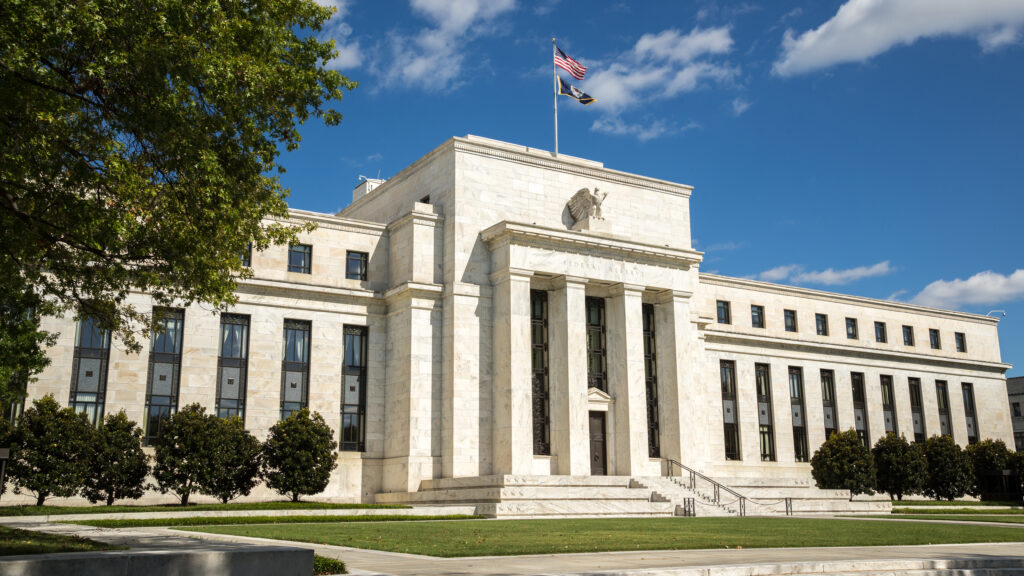
Following these announcements, Palantir shares rose by 8.2% in premarket trading Monday, reaching $32.81.The Federal Reserve recently cut interest rates by half a point instead of the expected quarter-point. This move left investors speculating whether it was an attempt to avoid recession or a strategy to maintain stable financial conditions.
Initially, Wall Street reacted positively, causing stocks to rally. However, this enthusiasm quickly faded as markets fluctuated wildly during Fed Chair Jerome Powell’s press conference and ended slightly lower for the day.
Powell expressed optimism about declining inflation pressures and emphasized the strong labor market. Yet some experts questioned if such a significant rate cut was necessary given Powell’s optimistic economic outlook.
JJ Kinahan from IG North America called it “an incredibly aggressive rate cut.” He pointed out that while meant to curb inflation, such cuts often have the opposite effect. Concerns arose over potential further large cuts and their implications on investor sentiment—hinting at unnecessary anxiety within the Fed regarding economic health.
Nancy Tengler of Laffer Tangler Investments felt that “the economy is slowing but still strong” and suggested that the Fed might be acting prematurely in its aggressiveness with these measures. Similarly, John Lynch from Comerica Wealth Management echoed concerns over associating large cuts with crises unnecessarily when current economic indicators don’t suggest immediate danger.
Lynch also highlighted ongoing worries about pricing due to high federal deficits despite gold prices nearing record highs—a signal inflation remains an issue despite recent controls. Even Powell acknowledged more work ahead before declaring victory against inflation fully achieved.
This complex situation underscores how delicate balancing acts are required by central banks: moving too late exacerbates recessions; cutting rates sharply risks reigniting inflation—a painful memory for those who navigated 1980s’ inflexible price hikes across essentials like gas or mortgage payments.
Scott Helfstein at Global X warned against overly aggressive moves without clear signs indicating slowdown needs urgent attention—as potentially supporting risky assets unduly versus traditional beneficiaries aligned historically better post-rate reductions (small-caps/value/cyclical sectors/equal-weighted S&P500).
Ultimately though seemingly not mandated solely keeping Wall Street content isn’t entirely bad thing either according to Comerica’s Lynch advocating pivot towards proven sectors benefiting typically lowered-interest environments ensuring balanced yet forward-looking investment strategies remain paramount amidst evolving fiscal landscapes ahead.