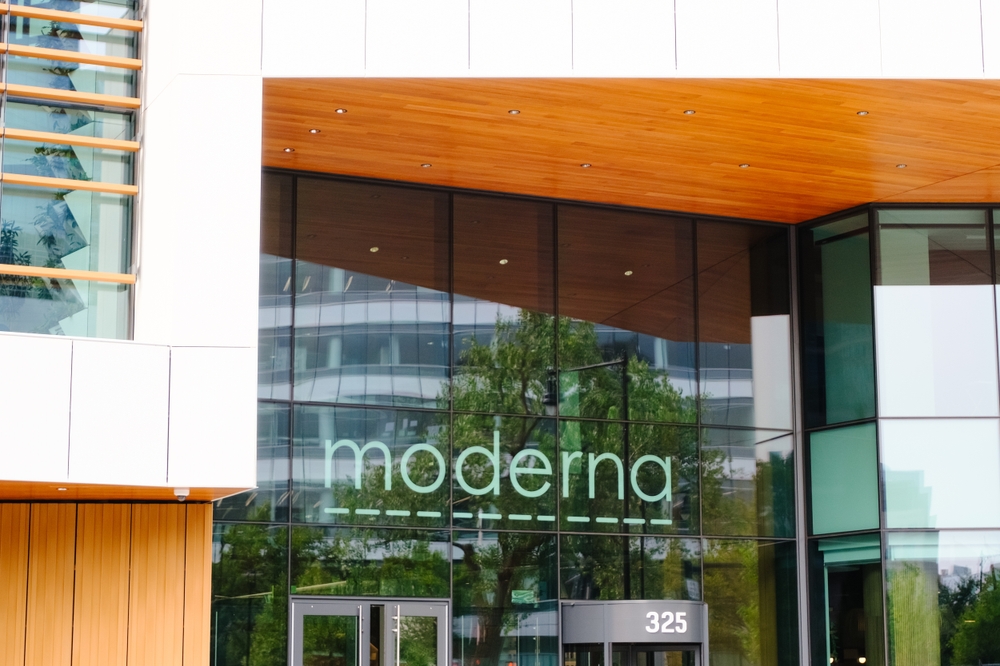


On Wednesday, Moderna shares surprised short sellers by nearly doubling, marking the stock’s best single-day performance ever. The rally also affected other parts of the market.
The stock jumped after Moderna announced positive trial results for intismeran autogene, a personalized cancer vaccine developed with Merck. The data showed it was better at preventing melanoma from coming back than Merck’s Keytruda when used by itself.
Earlier trial results were already positive, so expectations for this announcement were high. Moderna shares had already doubled earlier in 2026 as investors hoped the vaccine would help the company become a leader in personalized cancer treatment, moving beyond its Covid-era reputation.
Moderna shares ended Wednesday up 177%, the biggest one-day percentage gain in the stock’s history and the largest jump for any S&P 500 stock in 25 years. Analytics firm S3 Partners estimated that short sellers lost about $5.5 billion on paper. The vaccine news was the main driver, but the short squeeze likely made the rally even stronger as bearish investors hurried to close their positions.
Before the rally, about 13.7% of Moderna’s available shares were sold short, much higher than the S&P 500 average of 4.18%. For comparison, Regeneron Pharmaceuticals had a short interest of only 3.4%.
According to Mizuho, the Moderna news sparked a strong rally in one of the market’s most shorted stocks, which led to a wider squeeze in other heavily shorted names. The firm said the pressure spread beyond healthcare, as hedge funds with losses on Moderna shorts had to cut risk in other areas, often by selling their best-performing stocks. As a result, popular AI, infrastructure, and momentum stocks were sold to help cover short-side losses.
Other events added to the market’s volatility. On the same day, Marvell Technology agreed to let Google buy up to $12.2 billion of its stock as part of a bigger partnership. This sent Marvell shares much higher, while shares of Broadcom, Google’s longtime chip partner, dropped.
Because Broadcom makes up a large part of the semiconductor index, its drop pulled the whole sector down. The index closed 2.1% lower, even though Marvell rose nearly 10%. Mizuho pointed out that Broadcom’s weak performance this year has hurt the chip index overall, making it seem like the whole sector is struggling and causing more automated selling by traders and index funds.
In the end, after all the day’s ups and downs, most of the market’s turbulence could be traced back to one thing: Moderna’s vaccine news and the short squeeze it caused.